
Why your multi-chain wallet should do more than hold keys — it should be your portfolio’s co-pilot
Whoa!
I used to open five different apps just to see what I owned. That felt dumb, and it felt risky. My instinct said I was missing the big picture. Initially I thought spreadsheets would save me, but then I realized spreadsheets lie when transactions sandwich across L2s and bridges (and yeah, gas refunds and dust tokens are a pain). On one hand I wanted a single truth; on the other, I didn’t want another walled-garden app that hid my data from me — though actually that was exactly what many wallets became.
Here’s the thing. Portfolio tracking, dApp integration, and multi-chain management are often sold as separate features. Really?
They should be the same feature set, because they answer the same question: what is my exposure right now? Medium-term traders need clarity. Long-term holders need comfort. Builders need composability.
My first impressions were visceral: messy UIs, stale balances, surprise approvals. Hmm… they made me lose money once. Not a huge loss, but enough to change my behavior.
So I started testing wallets end-to-end: connecting to DeFi apps, simulating complex swaps, and tracking unrealized gains across chains. Something felt off about the way approvals showed up (or didn’t). I kept thinking, «There has to be a better way.»
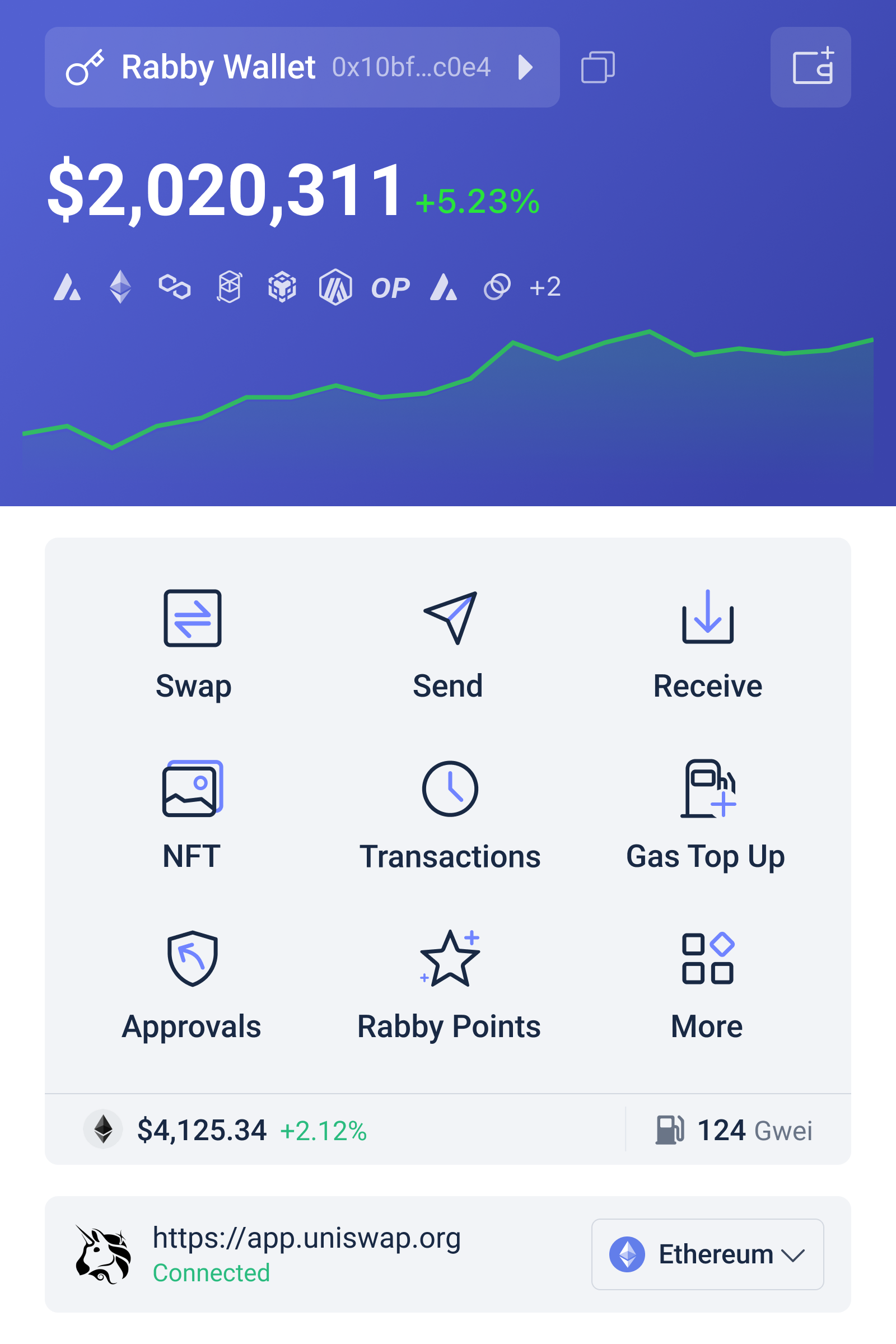
How portfolio tracking should actually work
Wow!
Portfolio tracking isn’t just numbers; it’s signal processing. You want clean aggregation, yes, but you also want anomaly detection and contextual actions — not just a passive list of tokens. Medium complexity transactions, like cross-chain swaps or multi-step vault interactions, need simulation before execution. That’s because on-chain state can change between the moment you craft a Tx and the moment it’s mined (and that can cost you dearly).
At the tactical level, a good wallet must show on-chain balances, pending activity, and divvy up assets by chain and by risk profile. It should let you drill into individual positions (e.g., LP shares, staked amounts, borrowed amounts). Longer-term, it must keep an eye on protocol-level risks — oracle quirks, soon-to-be-upgraded contracts, governance proposals that might affect yield — though full coverage there is aspirational and imperfect.
I fuss over UX details more than most. Okay, so check this out— wallets that integrate transaction simulation make a measurable difference. Seriously? Yes. When a wallet simulates your swap with a dApp, it shows slippage, fees across bridges, and whether an approval is strictly necessary. That saves time, and very often, money. My gut feeling said traders would care most, but retail folks appreciate it too — especially when a swap nearly reverts and they would have been charged gas for nothing. Somethin’ as small as an extra confirmation modal saved me once.
Now a quick tangent (oh, and by the way…) — approvals are the worst UX problem in Web3. They are also one of the biggest security vectors. Wallets that nudge you toward minimal allowances or batch-check approvals reduce attack surface. There, I said it. I know people who never revoke allowances until they get exploited. That’s on us.
Why dApp integration isn’t just a checkbox
Seriously?
dApp integration that matters is permissioned, contextual, and reversible. A wallet should let you sign messages, but it should also show what that signature will permit. Medium-term projects need the wallet to preserve composability: connect, simulate, and then hand-off the transaction to a trusted execution path. That chain of custody matters.
Initially I thought deep integrations would be invasive, but then I realized good integrations can be light-touch and privacy-preserving — think: on-device simulations, minimal metadata sharing, and clear intent summaries. Actually, wait—let me rephrase that: the wallet should refuse to hide any step from the user while still automating repetitive work where possible.
One practical test I run: connect to a lending dApp, borrow a small amount, repay it, and then look at the simulated gas and the real gas. If the wallet’s estimates consistently miss the mark, it’s a warning sign. On one hand many wallets do okay for simple swaps; on the other hand, when you compound interactions — approve, swap, stake, farm — things break down fast.
Multi-chain isn’t a buzzword — it’s a constitution
Hmm…
Managing assets across Ethereum, Arbitrum, Optimism, BSC, and a couple L2s means you’re effectively running a distributed portfolio. You need consistent UX across chains, and you need to know where your liquidity sits at a glance. That’s why chain-aware notifications matter: price oracles change, bridges lag, and some chains have intermittent RPC hiccups that obscure balances.
My instinct told me to trust native explorers, but actually wallets that synthesize data from multiple providers give a more resilient picture. They can cross-check balances, flag discrepancies, and prompt manual rescans when RPCs misbehave. That extra resilience is worth it, because when markets move fast, you don’t want your UI lying to you.
I’ll be honest: I’m biased toward wallets that put security and clarity ahead of flashy marketing features. The best multi-chain wallets don’t scream «supports 40 chains» while failing to give accurate balances on the five you actually use. They prioritize depth over breadth.
A checklist for choosing a wallet for DeFi power users
Alright, short list time.
Does it simulate transactions, not just estimate gas? Does it show token allocation across chains in one unified view? Does it warn you about risky approvals and let you revoke them easily? Is dApp connectivity explained in plain language (what’s being signed and why)? Can it import hardware keys or connect to your ledger in a way that doesn’t add friction?
On a practical note, does it offer exportable activity history and the ability to connect to portfolio trackers you already trust? Some folks like keeping on-chain data in their personal data lake; others want everything inside the wallet. Both choices should be supported, not forced.
Check this: when I adopted a wallet as my primary, I ran through this checklist, then I did a week-long stress test — simulated a multi-hop arbitrage, bridged stablecoins, pulled liquidity and redeployed. If the wallet survived that week without confusing me or losing fidelity on balances, it passed. Most didn’t.
Where the ecosystem still needs work
Wow.
Cross-chain identity is messy. Private key management still scares newcomers. The UX for gas tokens on different chains is inconsistent. Developers need better libraries for building safe approvals and for chaining multi-step transactions atomically — without forcing users to become devs.
On the policy side, wallets should support clear, revocable consents and standardized intent messages for common DeFi operations. That would reduce scams and make automated compliance checks possible. Though actually, building a standard is the easy part; getting broad adoption is the hard part.
Also, analytics that sit on top of wallets should be auditable. If a wallet recommends rebalancing into a new vault, users deserve a transparent calculation behind that nudge. No black boxes. I keep circling back to that because it bugs me when product teams hide assumptions under «optimal strategies.»
Why I recommend trying a wallet that treats you like a trader and a human
Seriously, personal preference here.
You want tools that assume you care about both security and speed. That means granular approvals, local simulations, clear transaction breakdowns, and a portfolio view that reconciles every chain. It also means decent defaults for newer folks, and power features for advanced users.
If a wallet can simulate your transaction pipeline and surface an intuitive summary — slippage, bridge latency, approval impacts, estimated final balance — it will save you time and money. That is not marketing hype. I’ve seen it save a mid-size trade during a volatile hour when slippage would’ve eaten the upside.
For practical testing, try a wallet end-to-end with the dApps you use daily. Connect, simulate, and revoke. See how it surfaces allowances. If it fails that basic trust test, move on. One wallet I keep coming back to because of its focus on simulation and approvals is rabby wallet. It doesn’t feel like a toy, and it doesn’t pretend to be everything — it focuses on being reliable.
FAQ
How important is transaction simulation?
Critical. Simulation helps you avoid failed transactions and unexpected slippage. It also shows when intermediate approvals are unnecessary and thus reduces risk. Simulations aren’t perfect, but they reduce surprises, and that is valuable.
Can a wallet replace a portfolio tracker?
Sometimes. If the wallet provides unified balances, exportable history, and chain reconciliation, it can. But some power users still combine wallet-native views with third-party analytics for advanced tax and risk analysis. It’s not all-or-nothing.
What should I test when evaluating multi-chain support?
Try deposits, withdrawals, cross-chain swaps, and approvals across your top 2–3 chains. Simulate a failed tx to see how the wallet surfaces errors. Test revoking allowances. And check whether RPC failures lead to wrong balances or just temporary UI blanks — that difference tells you a lot.

 C/ Canales, 1, 4ºF, Málaga
 952 35 99 88
 gbaabogadosmalaga@gmail.com
 Lunes - Viernes: 9:00 - 20:00